







.svg.avif)





5-day water fasting is one of the deepest and most studied forms of therapeutic fasting. It is not a wellness fad and no trend on social networks. It is a protocol with solid scientific evidence behind it, practiced for thousands of years in various cultural and religious traditions, and rediscovered today by modern medicine. But like any powerful tool, it works extraordinarily well when used correctly — and can hurt when approached without preparation.
🗓️ HOW TO PREPARE — The Week Before
The most common misstep in 5-day water fasting is not during fasting — but the week before it. Many people wake up on Monday morning and decide that “from today they are fasting.” The result? Day 1 and 2 become a nightmare of headaches, nausea and extreme irritability, and fasting is abandoned prematurely.
Proper preparation takes 5-7 daysand follows a simple logic: help the body make the transition gradually, not abruptly.
- Days 7-5 before fasting:Gradually eliminate processed foods, refined sugar, alcohol and coffee (if you drink a lot). Caffeine reduction should be gradual to avoid withdrawal headaches. Focus on whole foods — vegetables, fruits, lean proteins, healthy fats.
- Days 4-3 before fasting:Adopt a predominantly plant-based diet. Lighter meals, smaller portions. Eliminate red meat and fatty dairy products. Increase water consumption to a minimum of 2.5 liters per day.
- Days 2-1 before fasting:The last day should be a day of exclusively liquid or semi-liquid meals — soups, smoothies, vegetable juices, teas. This is the “bridge” day that makes the transition to fasting almost painless. The last solid meal the night before, preferably light and early — around 18:00.
What you prepare practically:
- Mineral water sufficient for 5 days (minimum 15 liters)
- Celtic salt
- Magnesium bisglycinate
- Cream of tartar (for potassium)
- Sodium bicarbonate
- Various unsweetened teas
- A diary or app to write down how you feel on a daily basis
📅 WHAT HAPPENS TO THE BODY — Daily
🌅 DAY 1 — Metabolic Transition
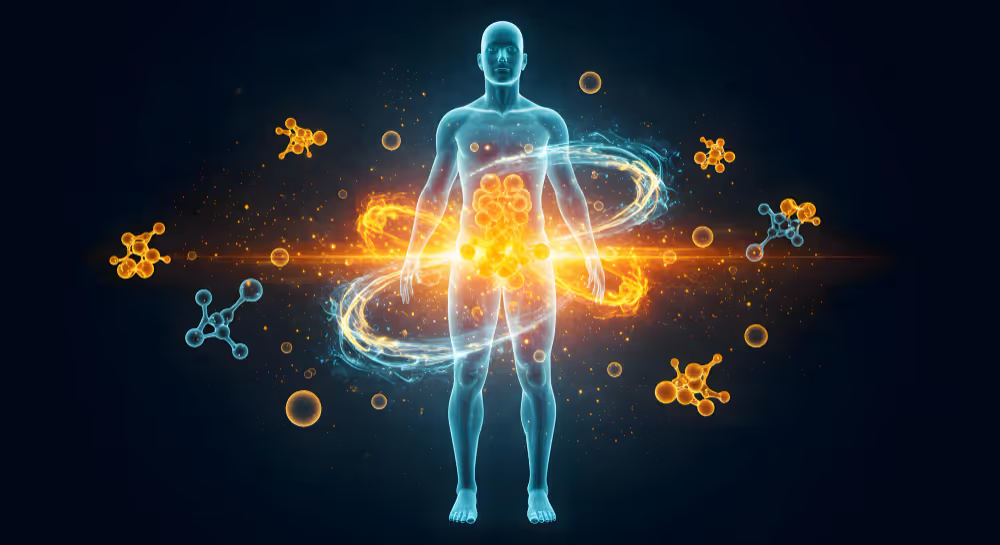
The first day is dominated by a single process: your body consumes glycogen reserves from the liver and muscles. Glycogen is the storage form of glucose, and you have about 400-500g of it in your body. As they deplete — a process that takes 12 to 24 hours — insulin drops dramatically, glucagon rises and the body gets the first signal that it needs to seek alternative energy sources.
What do you feel:Real hunger, frequent thoughts about eating, slight irritability, possibly a slight headache if the preparation was insufficient. Energy is fluctuating — moments of clarity alternating with moments of fatigue.
What happens at the cellular level:Low insulin activates lipolysis — the process of breaking down fats. The body begins to produce the first ketone bodies from the released fatty acids. Autophagy is at an early stage.
Practical advice:Drink Celtic salt water in the morning, stay busy and avoid social situations around meals. Day 1 is more of a psychological struggle than a physical one.
☀️ DAY 2 — Entering Ketosis
Day 2 is often the most physically difficult. Glycogen is almost depleted, the body aggressively transitions to ketosis, and the famous may appear “keto flu”Symptoms: headache, fatigue, dizziness, mild nausea and irritability.
The good news: these are signs that the post is working, not that something is wrong. Symptoms are mainly caused by electrolyte loss and rapid insulin drop, not by the absence of the food itself.
What happens at the cellular level:The liver actively produces ketone bodies — beta-hydroxybutyrate, acetoacetate and acetone. The brain, which normally works exclusively on glucose, begins to accept the ketone as an alternative energy source. Autophagy intensifies — damaged cells, dysfunctional organelles and malfolded proteins begin to be recycled.
Practical advice:This is the day when electrolytes matter most. Celtic salt in water in the morning, cream of tartar in the afternoon, magnesium in the evening. If you have intense headaches, a pinch of baking soda in water can help with its alkalizing effect.
🌤️ DAY 3 — Complete Ketosis and Mental Clarity
Day 3 brings, for most people, a surprising change: the unpleasant symptoms disappear almost completely and are replaced by a unexpected mental clarity, stable energy and a state of inner calm. Hunger, paradoxically, is significantly reduced — ketones suppress ghrelin, the hunger hormone.
What happens at the cellular level:Autophagy is at its maximum level. Studies show that after 48-72 hours of fasting, markers of autophagy reach values 3-5 times higher than normal. The immune system begins recycling aging or dysfunctional immune cells — a process with profound long-term health implications. Levels of IGF-1 (insulin growth factor) drop significantly — a marker associated with reduced cancer risk and accelerated aging.
Practical advice:Day 3 is often the turning point where people realize they can keep going. Take advantage of mental clarity for intellectual work, reading or meditation. Your body is literally in “repair and regeneration mode.”
🌙 DAY 4 — Deep Regeneration
By day 4, your body has completely switched to survival and regeneration mode. The metabolism has adapted effectively to the use of fats and ketones, hunger is minimal, and energy is surprisingly stable. Many people report a slightly euphoric state, sleep becomes deeper and more restful.
What happens at the cellular level:Hematopoietic stem cells — the cells from which all blood and immune cells are formed — are stimulated to regenerate. The researches of Dr. Valter Longo of USC demonstrated that prolonged fasting of 4-5 days can literally “reset” the immune system, removing aging immune cells and replacing them with new, functional cells. Levels of BDNF (brain-derived neurotrophic factor) increase — a compound that supports neuroplasticity and cognitive health.
Practical advice:Day 4 is ideal for introspection. Many people report a change in their relationship with food — anxiety about food disappears and a clearer awareness of body signals emerges.
🌟 DAY 5 — Completion and Preparation for Return
The last day of fasting is, paradoxically, one of the easiest. The body works efficiently on ketones, hunger is almost absent, and the mind is clear. Physically, you lost between 3-6 kg (mostly water and glycogen, but also real fat mass), blood pressure dropped, inflammatory markers decreased, and the immune system went through a full regeneration cycle.
Crucial Caution:The last day is not the time to plan an abundant “reward” meal. How you break the fast is just as important as the post itself.
🍽️ RETURN MENU — How To Break The Right Fasting

Recovery after 5 days of fasting with water is a process that lasts minimum 2-5 daysand should be treated with the same care as the preparation. A digestive system that has been at complete rest for 5 days cannot suddenly process a normal meal without unpleasant or even dangerous consequences — a phenomenon known as “refeeding syndrome”in extreme cases.
Day 1 of Return:
- Diluted vegetable juices (carrot, celery, beet), diluted bone broth, ginger tea, lemon water. Small portions, every 2-3 hours. Your stomach will appear to have shrunk — and it actually has. Not force.
Day 2 of return:
- Vegetable cream soup (zucchini, carrot, sweet potato), simple yogurt in a small amount, soft fruits (ripe banana, melon, grapes). Continue with fluids abundantly.
Day 3 of return:
- Soft-boiled eggs, avocado, boiled rice, steamed vegetables. The first real solid meal, but in small portions — half of what you normally eat.
4-5 days of return:
- Gradual reintroduction of proteins — boiled chicken, white fish, legumes. Avoid red meat, processed foods, sugar and alcohol for at least a week after fasting.
The Golden Rule: If the fasting lasted 5 days, then full recovery takes at least 2 days. Do not rush the process.
✅ WHO SHOULD DO THE 5-DAY WATER FASTING
5-day water fasting is suitable for:
Healthy adults between the ages of 25-60 with no diagnosed chronic conditions who have previous experience with intermittent fasting or water fasting of 24-48 hours.
People who want a deep metabolic reset, an improvement in insulin sensitivity, or a reduction in chronic inflammation.
Those who are looking for a change in their relationship with food and want to “relearn” the signals of hunger and satiety of the body.
People with an immune system that requires a cycle of regeneration — especially after periods of intense stress or illness.
❌ WHO SHOULD NOT DO WATER FASTING FOR 5 DAYS
5-day water fasting not recommendedfor:
Persons under 18 years of age or over 70 years old. Pregnant or lactating women.
People with type 1 diabetes or who are insulin-dependent. Those with a history of eating disorders (anorexia, bulimia).
People with severe heart, kidney or liver disease. Those with a BMI below 18.5 (underweight). People under chronic drug treatment without prior consultation with a doctor.
Those who have no experience with any type of post — a 5-day post is not a good place to start.
It starts with 16:8 intermittent fasting, then 24 hours, then 48 hours, before approaching 5 days.
🗓️ RECOMMENDED PERIODS OF THE YEAR
Not all seasons are equally suitable for a five-day water fast, and this is not just popular tradition — it has real physiological logic.
Spring (March-May) — Ideal Period No. 1.The body emerges naturally from the winter period with ample metabolic reserves. Moderate temperatures reduce heat stress, sleep is better due to gradually lengthening days, and access to natural light supports hormonal balance in fasting. The traditions of “spring cleaning” in various cultures, it would seem, have a solid physiological basis.
Autumn (September-October) — Ideal period No. 2.Temperatures drop, the body naturally enters a phase of metabolic transition, and food-related social stress is lower compared to the summer or winter season with the associated holidays.
Summer (July-August) — With caution.Extreme heat increases the need for hydration and electrolytes, which makes fasting more demanding. If you choose summer, make sure that you are in a cool environment and that you hydrate exemplarily.
Winter (December-February) — Not recommendedfor a 5-day fast. The body needs more energy for thermoregulation in the cold season, the holiday period creates considerable social pressure, and the lack of natural light can aggravate fasting-specific fatigue.
🏆 DOCUMENTED BENEFITS OF 5-DAY WATER FASTING
Research over the past two decades has documented significant benefits of prolonged fasting, including:
- reduction of inflammatory markers (CRP, IL-6) by 20-40%,
- improving insulin sensitivity and lowering basal blood sugar,
- deep activation of autophagy and cell regeneration,
- reset the immune system by stimulating hematopoietic stem cells,
- reduction of blood pressure in people with mild hypertension,
- improvement of the lipid profile (decrease in triglycerides, increase in HDL), and
- a significant and lasting change in the psychological relationship with food.

It means the exact opposite — fasting works so well that your brain has become so efficient on ketones that it has enough energy to produce cinematic culinary dreams in HD. Consider it a sign of progress. If you dream of a vegetable salad instead of pizza, then yes — you may be worried. 🍕😄
The researches of Dr. Valter Longo and his team at the University of Southern California, published in the journal Cell Stem Cell (2014), demonstrated that prolonged fasting cycles of 2-4 days activate hematopoietic stem cells and stimulate the regeneration of the immune system. Proposed mechanism: decreased IGF-1 and PKA (protein kinase A) reduces stem cell inhibition, allowing immune cell populations to regenerate.
Days 1 and 2 are the most difficult and are not ideal for work that requires maximum concentration or physical effort. Days 3, 4, and 5 bring surprising mental clarity to most people — many report being more productive than normal. Office, creative or intellectual work is perfectly compatible with fasting from day 3 onwards. Intense physical work, performance sports or activities that require quick reactions are not recommended during fasting.




















.svg)

