







.svg.avif)




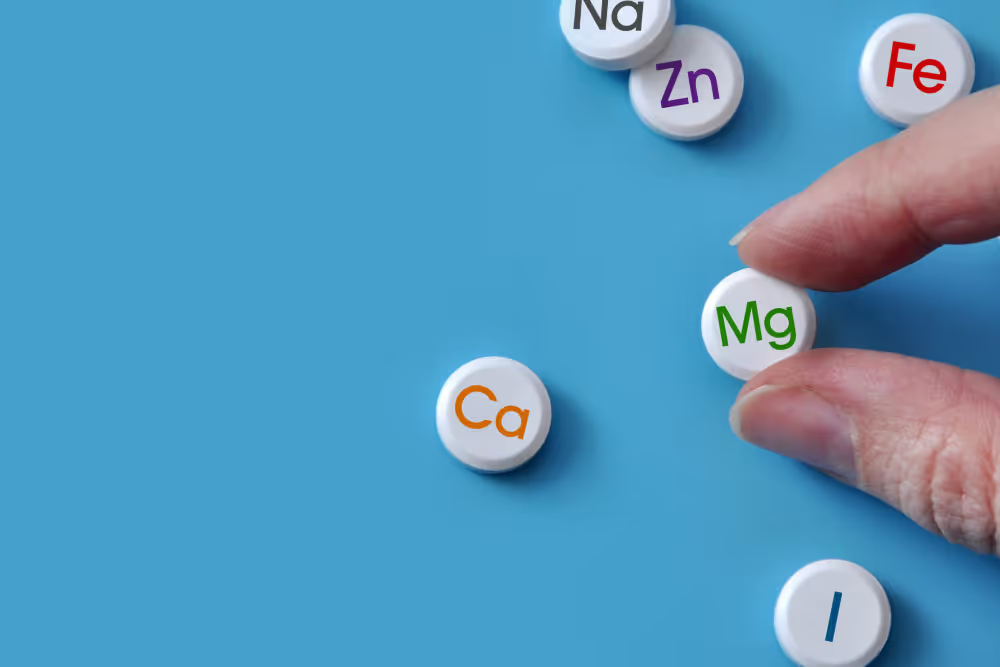
Some really help. Others... more confuse you 😄
Let's take them briefly, so that you know exactly what you choose.
Magnesium oxide — ~ 4% absorption
It is the most common form of magnesium, often used in cheap supplements.
👉 Benefit: very affordable and easy to find
👉 Disadvantage: it absorbs very poorly, so little efficiency
Magnesium sulfate — ~ 10% absorption
Also known as “bitter salt”,is used more often for its effects on digestion.
👉 Benefit: can relax muscles easily
👉 Disadvantage: has a fairly strong laxative effect
Magnesium orotate — ~ 15% absorption
It is a form associated with supporting energy at the cellular level and the functioning of the heart.
👉 Benefit: supports cellular energy
👉 Disadvantage: rarer and usually more expensive
Magnesium taurate — ~ 20% absorption
It is related to taurine and is used mostly for its effects on the nervous system.
👉 Benefit: helps calm and supports the nervous system
👉 Disadvantage: the effects are not very strong if you have a large deficit
Magnesium lactate — ~ 25% absorption
It is a milder form, well tolerated by sensitive people.
👉 Benefit: gentle on the stomach
👉 Disadvantage: moderate effects, not very “felt”
Magnesium citrate — ~ 30% absorption
One of the most popular forms, often used for digestion.
👉 Benefit: helps digestion and transit
👉 Disadvantage: can have a laxative effect if you overdo it
Magnesium malate — ~ 40% absorption
It is associated with energy production and is often used for fatigue.
👉 Benefit: good for energy and fatigue
👉 Disadvantage: not ideal for sleep
Magnesium L-threonate — ~70— 75% absorption
A newer form, known for its effects on the brain.
👉 Benefit: Supports concentration and cognitive function
👉 Disadvantage: it is more expensive than other forms
Magnesium glycinate — ~70— 80% absorption
It is a very well tolerated form, combined with glycine, an amino acid with a calming effect.
👉 Benefit: very good for sleep and relaxation
👉 Disadvantage: slightly higher price compared to basic variants
Good, and which magnesium do you choose?
If you want simple:
- for sleep→ glycinate
- for energy→ malate
- for digestion→ citrate
- for focus→ threonato
If you do not want to complicate:
👉 magnesium glycinate is the safest choice
Conclusion
Not all types of magnesium are the same. The difference in absorption really matters, but also the right shape for what you need.
If you choose well, feel the effect. If not... you just get the impression that you are doing something good.

Forms of magnesium with high absorption are magnesium glycinate and magnesium L-threonate, with an absorption of about 70— 80%. They are more effective than forms such as oxide or sulfate, which absorb much more poorly.
Absorption depends on the chemical compound to which magnesium is bound. Organic forms (such as glycinate, malate or citrate) are more easily recognized and absorbed by the body, while inorganic forms (such as oxide) have lower bioavailability.
Some forms, such as magnesium citrate or sulfate, attract water into the intestine and can have a laxative effect. That is why they are sometimes used even for constipation, but they can become unpleasant if taken in large quantities.




















.svg)

